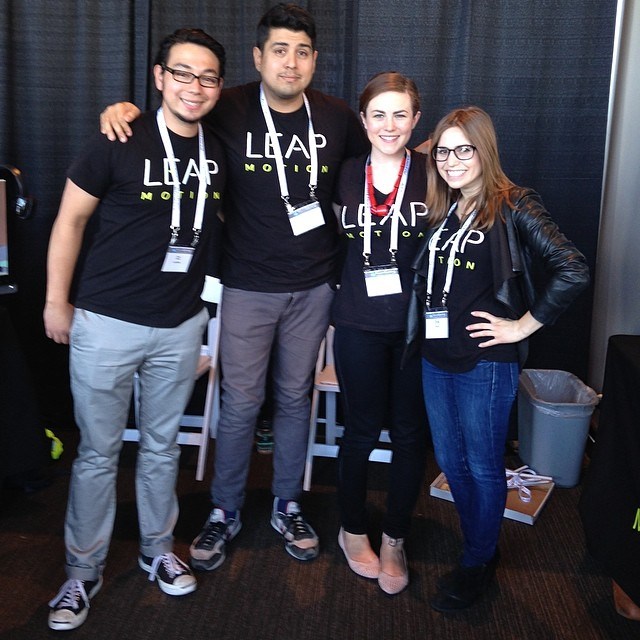
- Team Leap Motion hit the ground running early Wednesday morning, cueing our favorite Unity and Airspace demos.
- Following some opening remarks from Zack Lynch Founder of the Neurotech Industry Organization, Ed Fries launched the conference with a keynote about the delicate science of predicting which technologies will be fully realized and embraced by societies, and which are doomed to fail.
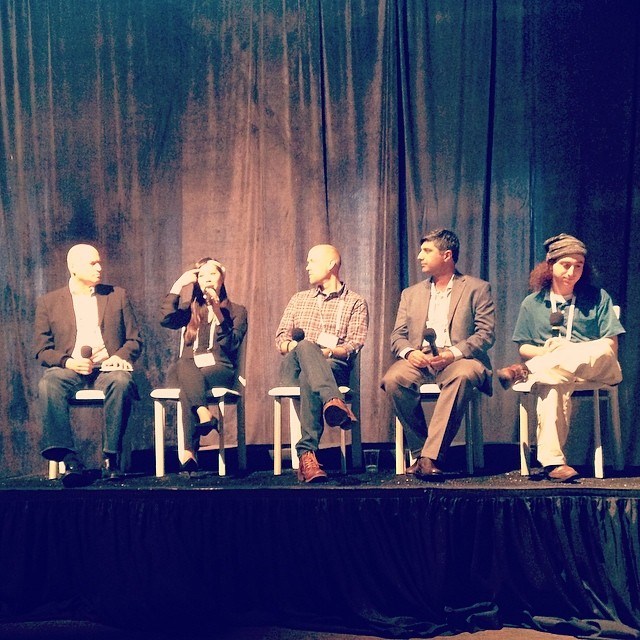
- Next came the Sensory Gaming Panel, moderated by Jim Gatto, a Gaming Partner of Pillsbury Law. Perhaps the most interesting question posed to the panel was what technologies they expect to emerge and become cultural touchstones in the course of the next 50 years.
- David shared his prediction that in 50 years, "the digital" will no longer be a material we think of as solely contained within our computer screens, but a material we can fully interact with in the world.
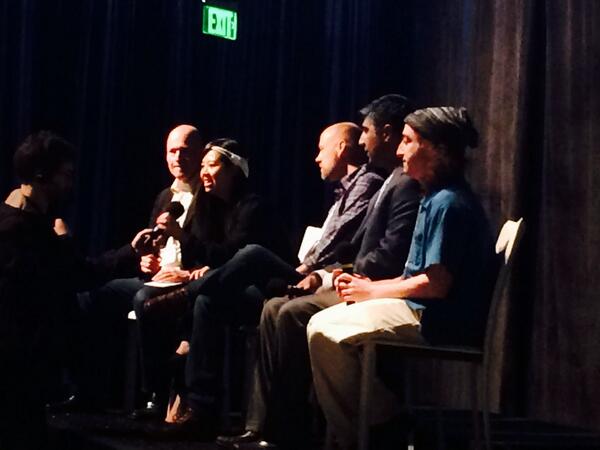 @LeapMotion #neurogamingconference Our founder David Holz breaking down the science of digital. pic.twitter.com/T5c1fODINJ
- The panel also dove into what exactly makes a piece of hardware or software get past "gadget mode" and go on to capture our hearts and minds.
 "[consumer]needs don't come from 'better' or 'replacing' but the 'mores'" (do more,enable more, engage more) David Holz @LeapMotion #ng2014
- After the panel, Team Leap Motion returned to the booth to continue demos. From academics to neuroscientists to game designers to entrepreneurs to bio haptic specialists, we thoroughly enjoyed the diverse crowd – all of whom seemed deadset on tackling the tough questions facing this space.
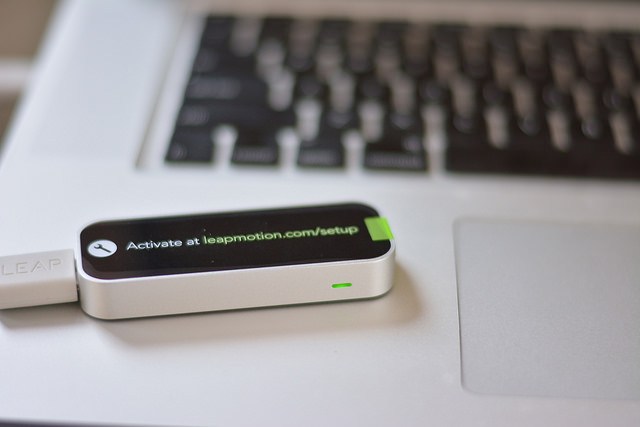
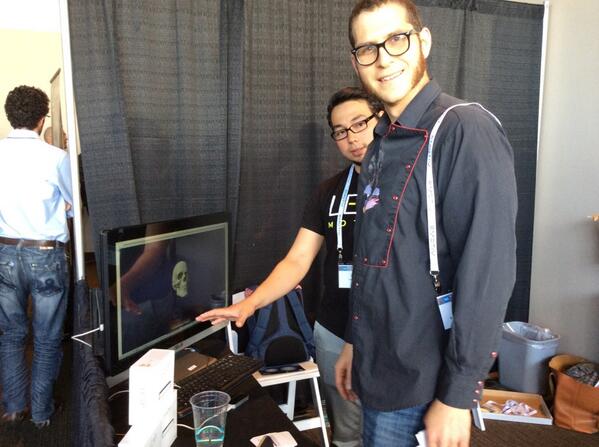 .@LeapMotion at #ng2014 expo senses hands and fingers to turn space above your keyboard into 3d interaction zone! pic.twitter.com/JwmxuQh5ID
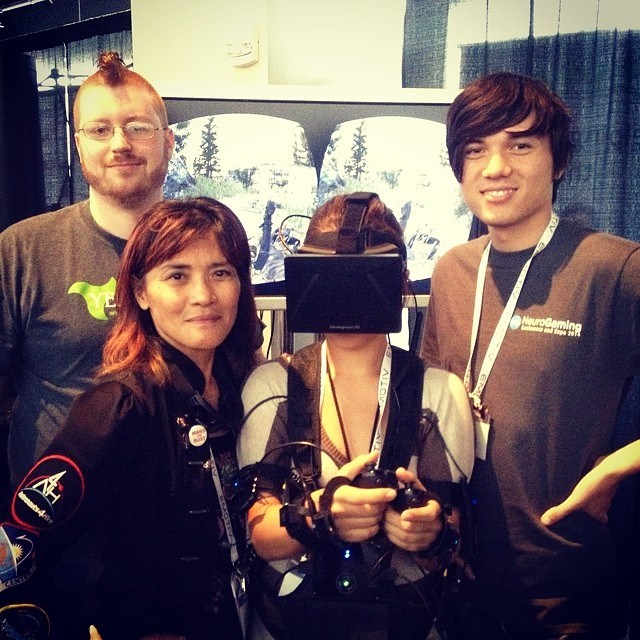 Dr Susan Jewell and her daughter. Actual astronauts in training using the @PrioVR #neurogaming #spaceexploration #missiontomars
- OculusVR founder Palmer Luckey and three other VR luminaries were also at NeuroGaming to discuss the future of VR, including how technologies like motion control, haptics, and neurosensing are being integrated into immersive new experiences.